
A few weeks ago I posted my comments on the come back of Indian Motorcycles with new models to be released summer 2007. The two Harvard Business School classmates who resurrected Chris-Craft have a new plan to bring Indian back from the brink. Can this icon be saved? Yesterday, I found this very interesting article by Fortune’s Eugenia Levenson. Here a few highlights.
In a tiny hotel screening room in Miami, 20 friends and colleagues crowded around Stephen Julius and Steve Heese. It was February 2005, and they were there to watch a prerelease version of a film called "The World’s Fastest Indian." The movie featured Oscar-winner Anthony Hopkins as the New Zealander who set a land-speed record on an Indian Scout motorcycle in the 1960s, but the group had gathered to see the film’s real star: the bike itself. When credits rolled, the room sprang to a standing ovation. For Heese and Julius, Indian’s new owners, the good news was that the fabled brand still resonated. The bad news? Indian, which the pair had bought out of bankruptcy a year earlier, wasn’t exactly ready for its close-up.
As Indian’s previous owners learned, reviving a so-called heritage brand is a rare and complicated undertaking. Classic brands can lose relevance if current models fail to live up to a storied past, but they also contain enormous potential for tapping into deep-seated loyalties. Julius and Heese thought Indian was due for a comeback too. "There are some brands you have to club to death for them to truly die," says Julius. And the pair, who met as classmates at HBS in the late ’80s, had more than case studies to draw on: They had spent the past four years turning around legendary boatmaker Chris-Craft, which had suffered a similar fall from grace. In mid-2004, with Chris-Craft headed toward calmer waters, Heese noticed another auction in the paper, this one for Indian. "The motorcycle market is bigger than the boating market," says Heese. "And there’s no question that motorcyclists are a passionate group. These are people who tattoo brand names on their body! There’s not another product category on earth that drives people to do that."Within days Julius’s private-equity firm swooped in with a bid, picking up intellectual property including trademarks, engineering and designs, as well as the tooling to manufacture Indian’s distinctive parts.
For the next two years the partners (Julius is chairman, Heese president) immersed themselves in every aspect of Indian’s production and marketing. "One of the beauties of these brands is that everybody will take your phone call," says Heese. "You wind up on a first-name basis with the biggest players in the industry."They got to know Indian’s former customers too. After sending out 2,500 surveys to former owners, they heard from nearly 1,000 about everything from engineering to design – and continue to receive close to 100 e-mails daily from people who want to play a part in the resurrection. They also moved Indian’s headquarters from California to North Carolina, where they were offered tax incentives and could draw from a NASCAR skilled-labor pool. (In January they’re opening a second Chris-Craft factory nearby, on the site of a former DaimlerChrysler subsidiary plant.) Indian’s first model – the Chief – won’t get to market till late 2007, so the turnaround is just beginning. But one thing’s for sure: For Julius and Heese, it’s already been a great ride.




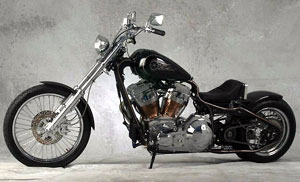 You are looking at the picture of the pride of Ray Wheeler. A ton of hours/dollars 159" bad boy bike made to go very fast at the Fun Drags of Sacramento. It did. With 0 traction, Ray made two 11 second passes at 125 miles per hour. Wow! Ray had a great day. But after spending the night in a million dollars hotel, Ray woke up to find out that his truck/trailer/bike was gone with somebody else. There is reward offered for anyone helping recover his pride. Every week I have 4500 different enthusiasts visiting my Blog. Hope that one of you know, saw, heard something about this crime. Contact me confidentially at
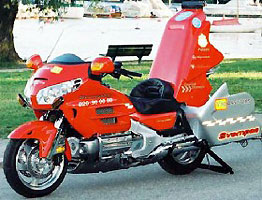





 The cut-off date for motorcycle entries for the second annual
